
There’s a useful thought experiment: imagine describing Twitch to someone in 2008. A platform where people watch other people play video games, live, with a chat window the streamer can see and respond to in real time. The response would have been some version of “why would anyone watch someone else play a game.” That response would have been completely wrong, and its wrongness points to exactly what Twitch understood before the rest of the entertainment industry caught up.
The insight wasn’t about gaming. It was about presence. Specifically, about what it feels like to be in the same room as something happening, versus watching a recording of it afterward. Most entertainment apps in the early 2010s were building around on-demand content – the Netflix model, where you have everything available and you watch what you want when you want it. Platforms that live at the intersection of live entertainment and digital engagement – including spinfin casino – operate on a version of the same principle Twitch cracked: that being there when something is happening feels categorically different from watching the same thing later. The live dimension isn’t just a feature. It restructures the entire emotional experience.
The Chat as the Product
Twitch’s chat is what people who haven’t used the platform consistently misunderstand. From the outside it looks like a noisy sidebar – text messages moving too fast to read, emotes in waves, in-jokes without context. What it actually is: a real-time collective commentary that turns passive viewing into participation.
When something unexpected happens – a dramatic in-game moment, something the streamer says, a technical failure that becomes absurdity – the chat doesn’t just react. It reacts simultaneously, visibly, in a way everyone watching can see. The wave of identical messages, the emote spam, the running joke the streamer reads and responds to: these are social experiences. Literally social – you are sharing a moment with other people and you can see each other sharing it.
What Synchronicity Actually Does to an Audience
The synchronicity is what most entertainment apps underestimated and what Twitch built its identity around. Watching a video of something that happened is solitary even when millions watch it. Watching something happen, alongside people also watching it happen, is communal. The gap isn’t marginal – it’s the difference between reading about a concert and being at it.
Twitch made that gap structurally irrelevant for digital content. You didn’t have to be physically present. You just had to be watching at the same time as everyone else, with the tools to acknowledge that fact.
The Streamer as Presence, Not Content
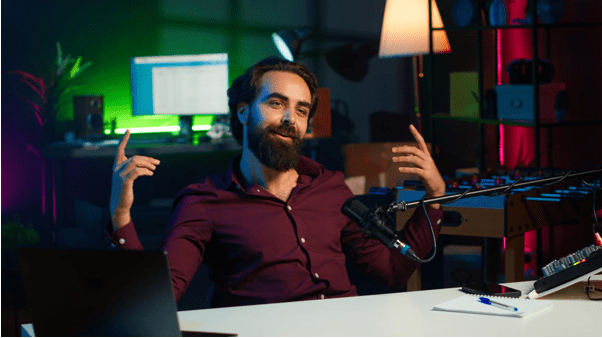
The other thing Twitch understood, which took years for competitors to absorb, is that audiences weren’t just watching content – they were spending time with a person. The streamer model is fundamentally different from the creator model on YouTube or the performer model in television. A streamer is present: doing something, noticing their audience, responding to chat, having real-time reactions that haven’t been scripted or edited.
| Platform Model | Audience Relationship | Content Type | Repeatability |
| YouTube | Creator-viewer | Produced, edited | High – evergreen |
| Netflix | Performer-viewer | Scripted, polished | High – catalogue |
| Twitch | Streamer-community | Live, unedited | Low – ephemeral |
| Traditional TV | Broadcaster-audience | Produced, scheduled | Medium – repeats |
| Podcasts | Host–listener | Semi-produced | High – archive |
The low repeatability of Twitch content is a feature, not a bug. A stream that happened is gone in the meaningful sense, even if a VOD exists. The value was in being there. This is why subscriptions and donations happen at rates that look irrational if you judge the content on produced quality alone. People aren’t paying for clips. They’re paying to be part of something ongoing.
Why FOMO Is a Better Retention Tool Than Algorithms
Twitch discovered, before anyone was articulating it in product terms, that fear of missing out is a more powerful retention mechanism than algorithmic recommendation. Netflix’s algorithm ensures you always have something to watch. Twitch’s live structure means that if you miss tonight’s stream, you missed it. The community experienced something without you. That absence creates pull that recommendation engines can’t replicate – not about finding the right content, but about not being left out of a real-time social experience.
What the Entertainment Industry Eventually Noticed
The shift toward live content across entertainment – sports streaming as a subscription driver, real-time social features on video platforms, creator livestreams on YouTube and Instagram – is the industry catching up to what Twitch demonstrated years earlier. The form matters. Live content binds audiences to schedules, to communities, to ongoing relationships with specific personalities. It converts passive consumption into active presence.
The apps that still haven’t fully absorbed this lesson tend to treat live as a content format rather than a structural principle. They add a live tab, host occasional events, and then wonder why engagement spikes during those moments and returns to baseline afterward. What Twitch understood is that live can’t just be a feature you bolt on. It has to be the architecture that everything else is built around. Presence isn’t something an algorithm delivers. It’s something you have to be there for.