
Water trapped behind a retaining wall can exert pressure that gradually undermines structural stability, while saturated soil on a slope may become heavier and more susceptible to movement. Geotechnical drainage systems help manage these risks by collecting groundwater and directing it toward designated outlets.
Drainage pipes manufactured by corrugated pipe extrusion machines require profile, wall strength, and opening layout suitable for ambient soil and site installation conditions. Unlike ordinary water conveyance pipes, geotechnical drainage products must balance water intake with resistance to backfill pressure and the retention of surrounding soil particles.
Ring Stiffness Under Backfill Pressure
Retaining walls experience lateral earth pressure from the soil behind them, with the actual load influenced by soil type, compaction, groundwater conditions, wall geometry, and surcharge loads near the surface. Drainage pipes installed behind these structures may be exposed to pressure from compacted backfill and the weight of overlying material. If a pipe deforms excessively, its internal flow area can shrink, reducing drainage efficiency precisely when water removal is most important.
Corrugated geometry improves structural efficiency by using alternating ridges and valleys to resist deformation. Compared with a smooth wall of similar material consumption, a well-designed corrugated profile can provide greater resistance to external loading. However, ring stiffness alone does not determine field performance. Pipe diameter, wall thickness, polymer characteristics, bedding quality, and the degree of support provided by the surrounding soil all influence how loads are transferred through the installation.
Production tolerances matter because small geometric variations can affect the pipe’s response under pressure. Across every production run, corrugated pipe making machines must sustain consistent profile depth, pitch, and wall distribution. Material temperature and cooling conditions also influence dimensional stability. For geotechnical projects, manufacturers and specifiers should assess ring stiffness using the applicable test method and consider whether the tested product matches the pipe dimensions and material intended for installation. Site-specific loading calculations remain essential; a nominal stiffness rating should not be treated as a substitute for engineering assessment.
Filter Fabric Compatibility and Soil Retention
Drainage pipe openings must admit groundwater without allowing excessive quantities of soil to enter the system. This balance depends on the soil’s particle-size distribution, permeability, and susceptibility to migration, as well as the design of the surrounding filter layer. If openings are too large for the soil conditions, fine particles may move into the drainage zone and accumulate inside the pipe. If the filter is too restrictive or becomes clogged, water movement can decline even when the pipe itself remains structurally sound.
Geotextile filter fabric is commonly used to separate soil from drainage aggregate or to protect perforated pipe openings, depending on the system design. Its pore structure must be compatible with the surrounding ground: the fabric should retain soil particles while allowing water to pass at the required rate. Soil gradation, hydraulic gradients, and the potential for long-term clogging should inform selection. A fabric suitable for coarse granular backfill may not behave identically in fine sand, silty soil, or mixed ground.
Pipe perforations and filter materials should be evaluated as parts of one drainage assembly rather than as independent components. Hole size, spacing, and open area influence water entry, while fabric placement and aggregate gradation determine how freely groundwater reaches those openings. During installation, fabric tears, poorly sealed overlaps, or contamination by fine soil can create local weaknesses. Quality control should cover the finished pipe’s opening dimensions and distribution, alongside inspection of the filter materials and installation details. These measures help preserve drainage pathways without encouraging unwanted soil loss.
Balancing Drainage Capacity With Geotechnical Requirements
Drainage capacity depends on more than the number of perforations. Pipe diameter, longitudinal gradient, internal roughness, outlet conditions, and the amount of groundwater entering the system all influence conveyance. A retaining wall behind low-permeability clay may require a different drainage arrangement from a steep slope with permeable granular material and substantial groundwater inflow. Project specifications should reflect anticipated water volumes, seasonal conditions, and the consequences of outlet blockage.
Material selection also affects long-term service. The pipe must tolerate the expected soil chemistry, moisture exposure, installation handling, and design loads. Flexible thermoplastic pipes can accommodate certain ground movements, but their performance depends on the relationship between pipe stiffness and soil support. Proper trench or drainage-zone preparation, controlled backfilling, and suitable compaction practices help limit distortion and protect the pipe during construction. Outlet protection and access for inspection may also be necessary where sediment accumulation or discharge erosion is a concern.
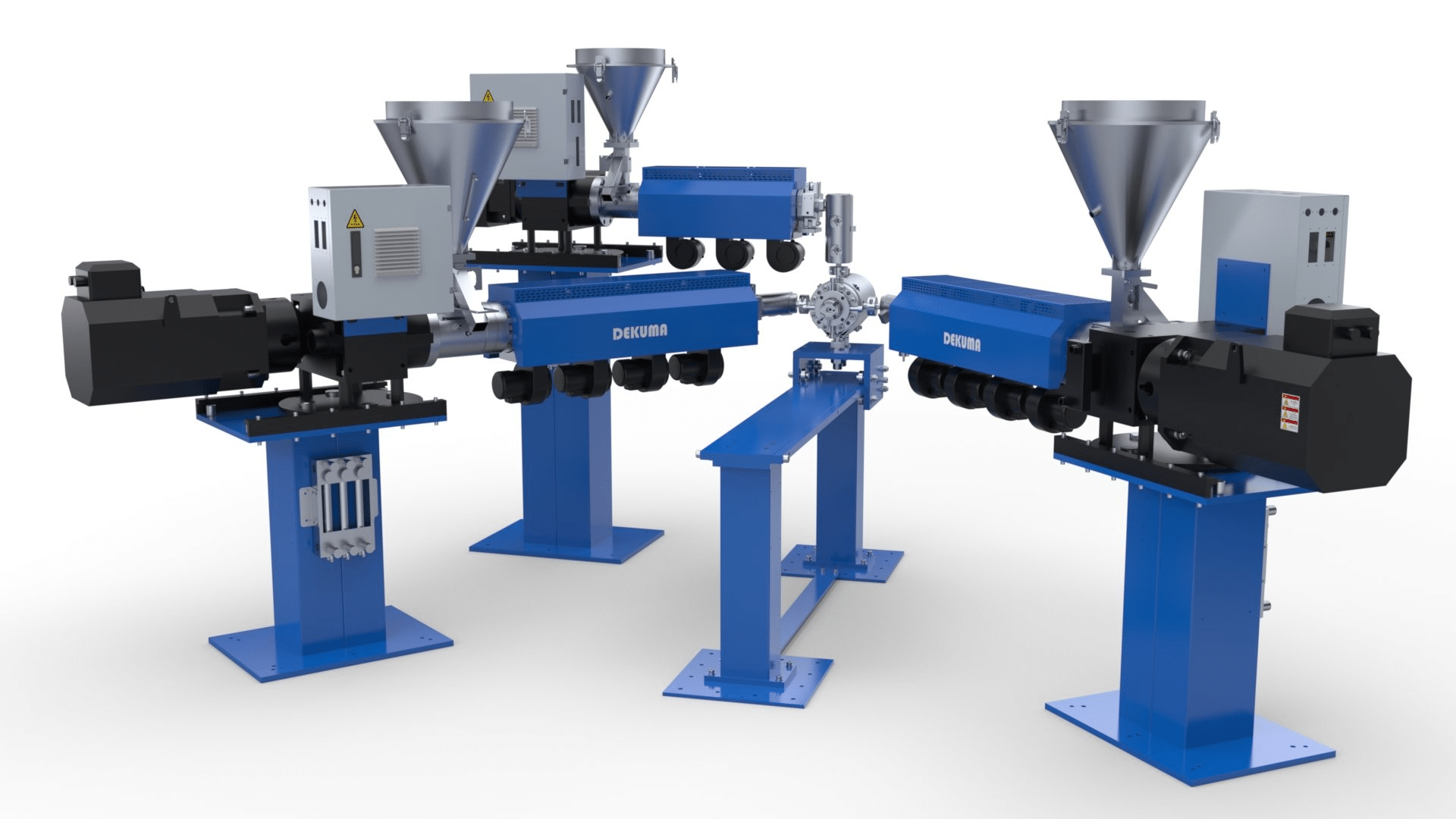
DEKUMA supplies specialized extrusion equipment, including a PA pipe extrusion line intended for automotive tubing applications. Its published application information describes multilayer production for corrugated tubes used in vehicle cooling systems, with materials such as nylon (PA) and PP/PE. This automotive application is distinct from geotechnical drainage pipe manufacturing; equipment suitability for retaining-wall or slope drainage must be verified against the required polymer, pipe diameter, corrugation profile, perforation process, and applicable performance standards. The broader manufacturing principle remains relevant: stable extrusion and repeatable dimensions are important when a pipe’s geometry contributes directly to its structural and hydraulic performance.
Conclusion
Reliable geotechnical drainage depends on coordinated decisions about external loading, groundwater flow, and soil retention. Ring stiffness helps characterize a pipe’s resistance to deformation, but its value must be interpreted alongside installation support and site-specific pressure conditions. Filter fabric and perforation design then determine whether water can enter the system without carrying excessive soil into the drainage pathway.
Consistent replication of the specified profile is mandatory for corrugated pipe extrusion machines, and corrugated pipe making machines must be reviewed against material and processing requirements of the finished product. With its specialized extrusion experience, DEKUMA provides a relevant reference for understanding controlled corrugated-tube production, while geotechnical projects still require application-specific engineering, testing, and verification.