
Cooler evenings often change how an outdoor living area is used, making warmth, layout, and fuel choice more important than decorative appeal alone. Outdoor fireplace options vary considerably in size, construction, ventilation, and maintenance requirements, so shoppers benefit from examining practical details before considering appearance. SUNJOY provides one example of how a compact fire feature can suit smaller patios without overwhelming the available space. Careful comparison helps homeowners choose equipment that matches both the physical setting and the way the space will actually be used.
Start With Size And Placement
Available floor space should be measured before browsing different models. Width matters, but depth and surrounding clearance can be equally important because furniture, walkways, walls, fencing, and vegetation all influence where a fire feature can safely sit. Compact designs may work particularly well in conversation corners where larger installations would restrict movement.
Heat exposure deserves attention during the planning stage. Combustible furniture, decorative materials, curtains, and nearby plants should remain outside the clearances specified by the manufacturer. Overhead structures require additional consideration because rising heat and smoke can affect ceilings, roofing materials, and enclosed areas.
Wind direction also affects placement. Smoke may drift toward doors, windows, seating, or neighboring properties, especially across open patios. Studying typical airflow around the yard can reveal whether one location is more practical than another. Local fire regulations should also be checked before installation or regular operation.
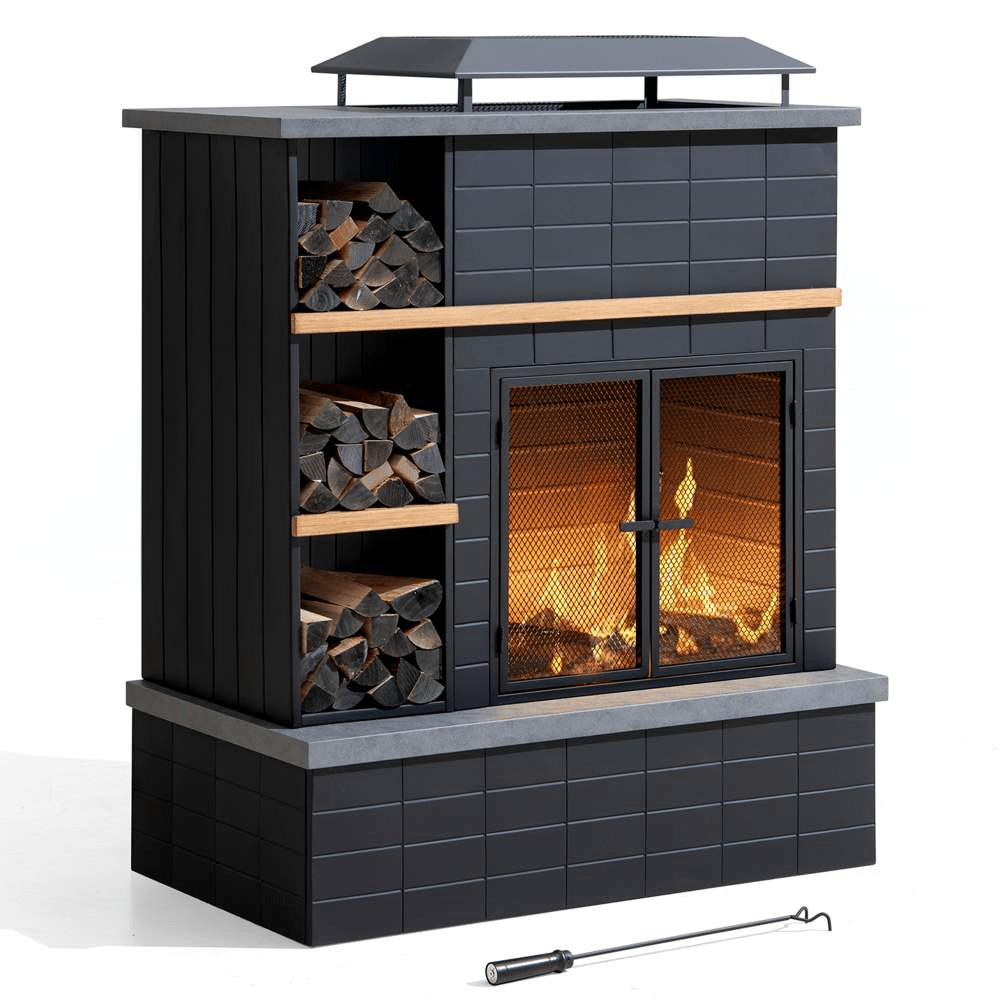
The Heritage Wood Burning Outdoor Fireplace with Log Holders 42″ illustrates a compact approach. Measuring 42 inches wide, the model is designed to bring the visual presence and function of an outdoor fire feature into smaller patios, conversation areas, and backyard corners. Integrated side log holders provide dedicated storage beside the firebox, keeping firewood organized without requiring a separate rack immediately next to the seating zone.
Examine Construction And Heat Performance
Material choice influences durability, appearance, weight, and maintenance. Steel can provide a substantial frame, while stone-inspired finishes may create a traditional architectural character. The firebox itself should be designed specifically for the intended fuel and operated according to the manufacturer’s instructions.
Heat output and radiation pattern also depend on construction details. The shape of the firebox, depth of the combustion chamber, and materials used in the surrounding structure affect how warmth spreads across the patio. A design that directs heat forward can make a smaller fireplace feel more effective in a seating area, while models that radiate in all directions may suit larger, more open spaces. Without understanding how the firebox directs heat, a unit that looks adequate in a photo can feel underwhelming—or overwhelmingly hot—once it is installed and lit.
Weight and structural proportions should also be considered during delivery and installation. Narrow access paths, steps, gates, and patio transitions can create practical challenges for larger units. Checking package dimensions and installation requirements before purchase can make the setup process considerably easier.
Understand Fuel, Smoke, And Ventilation
Wood creates a traditional fire experience, but it also introduces responsibilities that should not be overlooked. Dry, seasoned firewood generally produces less smoke than freshly cut or damp wood, which can contribute to additional smoke and residue buildup
Ventilation deserves particular attention with wood-burning systems. Chimneys and vents need to remain unobstructed so combustion gases can move away from occupied areas. Creosote can accumulate inside flue components over repeated use, making inspection and cleaning an important part of long-term maintenance.
Firewood storage should remain separate from the active fire area. Excess logs positioned too close to flames can increase unnecessary heat exposure and create clutter around the hearth. A dedicated storage location also makes it easier to keep the fuel dry and protected from weather.
Compare Features Before Buying
Searching outdoor fireplaces for sale can reveal substantial differences between products that appear similar at first glance. Buyers should examine dimensions, fuel type, construction materials, included components, ventilation design, and installation requirements rather than relying solely on photographs or promotional descriptions.
Maintenance requirements deserve their own comparison. Ash removal, soot accumulation, surface cleaning, and chimney inspection can vary according to construction and frequency of use. Models with convenient access to serviceable areas may be easier to maintain over several seasons, although every unit still requires attention based on its specific instructions.
Price should also be viewed alongside ownership requirements. Delivery arrangements, assembly needs, protective covers, replacement components, and local installation considerations can affect the overall cost. Checking these details early provides a clearer picture than comparing the initial purchase price alone.
Build A Better Outdoor Gathering Area
Seating arrangement can determine whether the fire feature becomes a useful social space or simply occupies valuable patio area. Chairs positioned at appropriate distances allow guests to feel the warmth without crowding the hearth. A curved or angled arrangement can also encourage conversation while keeping the main pathway open.
Lighting should complement rather than compete with the fire. Low-level illumination around steps and walkways improves visibility, while excessive brightness can reduce the visual impact of the flames. Textiles and seasonal decorations should remain well away from hot surfaces and active combustion zones.
An outdoor fireplace can also influence how the entire backyard is organized. The fire feature may define one zone for conversation while another area handles dining, food preparation, or storage. Such separation reduces congestion and gives the patio a clearer functional layout.
Conclusion
Good purchasing decisions come from matching equipment to the physical conditions and habits of the household rather than selecting purely by appearance. Outdoor fireplaces for sale should be assessed through dimensions, materials, ventilation, fuel requirements, maintenance, and placement before the final choice is made. Smaller patios may benefit from compact proportions, while larger landscapes can accommodate more substantial architectural features.
With its 42-inch width and integrated log holders, the Heritage model demonstrates how a focused footprint can support outdoor entertaining without consuming excessive space. Against that practical backdrop, SUNJOY offers an example worth considering when evaluating outdoor heating solutions for different backyard layouts.